Bible Journaling: Transforming Your Scripture Study Through Art and Reflection
For centuries, the Bible has been a source of spiritual guidance, comfort, and profound wisdom. Yet, for many modern readers, engaging with scripture can feel daunting or disconnected from the rhythm of everyday life. The practice of Bible journaling has emerged as a powerful, creative response to this challenge, offering a new way to increase your faith and understanding by actively bringing your personal artistry into the pages of scripture. It transforms reading from a passive activity into an immersive, reflective, and deeply personal conversation with God's word.
The Heart of Bible Journaling: More Than Just Notes
At its core, Bible journaling is the practice of responding to scripture visually and textually within a dedicated space. It goes beyond simply taking sermon notes in a notebook. It is an intentional process of engaging with a passage—praying over it, meditating on its meaning, and then expressing that meaning through words, drawings, paintings, calligraphy, or collage. This act of creation makes the study of scripture a holistic experience, engaging both the analytical mind and the creative spirit.
The purpose is twofold: to deepen comprehension and to strengthen faith. When you illustrate a verse about God's peace, for example, you are forced to consider what "peace" looks and feels like to you personally. This process lodges the scripture in your memory and heart far more effectively than merely reading it. The journal becomes a logbook of your spiritual journey, a tangible record of how God's word speaks to you in different seasons of life.
Common Misunderstandings About Bible Journaling
Some may assume this practice requires professional artistic skill, or that it involves drawing directly in a precious Bible, which can feel disrespectful. These are common barriers that need clarification.
- Artistic Skill is Not Required: Bible journaling is about expression, not exhibition. Simple doodles, highlighted words, written prayers, or even thoughtfully chosen stickers are perfectly valid. The value is in the process of connection, not the aesthetic result.
- It's About Your Space, Not the Scripture Pages: Most practitioners use a dedicated journal or notebook—like the described Bible Journal—rather than their primary Bible. This alleviates concern about "defacing" scripture and provides ample, unrestricted space for creativity.
- It's Not Just for "Artsy" People: The practice is for anyone seeking a deeper connection. The "art" can be the art of thoughtful handwriting, the art of arranging key phrases, or the art of reflective writing.
The Bible Journal: A Designed Companion for Your Journey
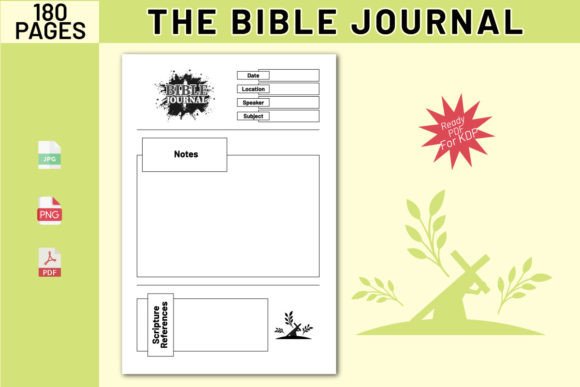
While any notebook can serve, a purpose-built journal enhances the experience. Consider a tool like The Bible Journal, described as a nice logbook for every pious person, enriched with relevant points and eye-catching ornaments. Such a specialized journal provides structure and inspiration.
Its practical features—like 150 pages in a portable 6 by 9 inch format—offer ample room for sustained practice without being bulky. The inclusion of high-quality PDF, JPG, and PNG digital resources (at 300 dpi) speaks to how this ancient practice fits seamlessly into modern, tech-connected life. You can print ornaments for collage, use digital elements for planning, or share your creations online to inspire a community.
The pre-designed relevant points and ornaments serve as gentle guides, helping users overcome the initial "blank page" hesitation and offering starting points for reflection. They don't dictate the response but rather invite the user into the creative process, making the practice more accessible and less intimidating for beginners.
How Bible Journaling Fits Into Modern Daily Life
In a world of constant digital distraction and fast-paced routines, Bible journaling creates a sacred pause. It fits into modern life as a form of mindful spirituality.
- It Integrates with Daily Devotion: Replace 10 minutes of passive reading with 10 minutes of active journaling. This turns a daily devotional habit into a more impactful ritual of engagement.
- It Enhances Prayer: Journaling can be a form of prayer. As you visually explore a verse, you are often in a state of prayerful meditation, asking, "God, what does this mean for me today?"
- It Connects Creativity and Faith: For those who feel creative in other areas of life (work, hobbies, etc.), this practice bridges that creative identity with their spiritual walk, affirming that God welcomes and values their unique mode of expression.
- It Creates a Tangible Legacy: The physical journal becomes a family heirloom, a record of faith that can be passed down, offering a more personal witness than a textbook alone.
Practical Steps to Begin Your Bible Journaling Practice
Starting is simple. The goal is to begin, not to create a masterpiece.
First, choose your tools. A dedicated journal, some pens, pencils, or basic watercolors, and perhaps a Bible you enjoy reading. Next, select a short passage. Don't start with an entire chapter; choose one or two verses that resonate or intrigue you. Read the verse slowly, several times. Pray over it and ask simple questions: What is the main message? What word stands out? How does this relate to my life right now?
Then, express your response. Here are natural examples:
- If the verse is "The Lord is my shepherd" (Psalm 23:1), you might draw a simple pastoral scene, write the word "provider" in large letters, or list ways you've felt guided recently.
- If the verse is "Be still and know that I am God" (Psalm 46:10), you could create a background of calming colors, write the word "still" in a peaceful font, or jot down a list of things you need to cease worrying about.
The key is to let the expression be personal and free. There are no rules for what is "correct."
The Significance: Building a Broader Understanding of Scripture
Bible journaling fundamentally changes how you approach the Bible. It moves you from a spectator to a participant. This active participation builds a broader, more intimate understanding.
You begin to see themes connect across books as your journal pages accumulate. A verse on grace in Ephesians might remind you of your earlier journal entry on grace in Genesis, weaving a personal tapestry of theological understanding. It also makes scripture relevant to everyday life. By constantly asking "What does this mean for me?" you train yourself to apply biblical wisdom to daily decisions, relationships, and challenges.
Furthermore, it combats the tendency to view the Bible as a distant, historical text. Your journal, filled with your contemporary art and reflections, visually declares that these ancient words are living, active, and speaking directly to you in the present moment. This is the ultimate goal: to increase not just intellectual understanding, but living, breathing faith.
A Lifelong Practice of Growing Faith
Bible journaling is not a one-time project but a scalable habit that can grow with you. As you become more comfortable, you might try new techniques or tackle more complex passages. The journal itself becomes a testament to your spiritual growth, showing how your understanding and artistic expression have matured over time.
In a digital age, the physicality of the practice is profoundly meaningful. It represents a commitment to slow, thoughtful engagement. Whether using a beautifully designed Bible Journal or a simple notebook, you are creating a space where faith, art, and daily life beautifully intersect. By bringing your art into scripture, you open a unique dialogue with God, one that deepens your roots, clarifies your mind, and nurtures your soul for the journey ahead.
May this practice be a blessing to your walk, as you discover the vibrant, personal conversation waiting within the pages of God's word.