What a Monthly Sales Tracker Interior Can Do for Your Business
If you’re running a business, selling products online, or managing any revenue-generating activity, you know that feeling at the end of the month. You scramble to gather receipts, check bank statements, and piece together a rough picture of how you performed. That process is stressful, inefficient, and often inaccurate. This is where a dedicated Monthly Sales Tracker Interior becomes a game-changer. It’s not just a pretty template; it’s the operational core of a system designed to capture, organize, and analyze your sales data with clarity and consistency.
The Real-World Power of a Structured Sales Log
Imagine you’re a freelance graphic designer. Your income isn’t a single monthly salary; it’s a collection of project fees, maybe some passive income from digital assets, and occasional consulting work. Without a tracker, you might only know your bank balance. With a tracker, you can see which client types bring the most revenue, which months are historically slow, and whether your new pricing strategy is actually working. This transforms guesswork into strategy.
The utility spans countless scenarios. A small boutique owner can track daily sales, link them to specific marketing campaigns, and monitor inventory turnover. An Etsy seller can log each transaction, noting which product variations sell best and calculating net profit after fees. Even a service-based consultant can track contract values, payment dates, and recurring client revenue, making forecasting and budgeting a factual exercise rather than a hopeful one.
Who Actually Needs This, and How They Use It
The audience for a monthly sales tracker is surprisingly broad. It’s not solely for Fortune 500 companies.
- The Solopreneur and Side-Hustler: For someone managing a business alongside other commitments, time is the scarcest resource. A pre-designed tracker interior eliminates the need to build a system from scratch. They benefit by having a single, trusted place to record every sale, immediately seeing their progress toward monthly goals, and reducing administrative overhead.
- The Small Team or Startup: When multiple people are involved in sales or client management, consistency in record-keeping is critical. A standardized tracker interior serves as a shared language for the team. It ensures everyone logs data the same way, making consolidated reports accurate and reliable. This is foundational for team meetings and strategic planning.
- The Creative or Project-Based Worker: Artists, writers, photographers, and craftspeople often have irregular income streams. Their use of a tracker goes beyond simple totals. They might track sales per platform (e.g., website vs. social media vs. gallery), correlate sales with release dates of new works, or monitor the performance of different collections or series over time.
- The Digital Product Creator: For someone selling eBooks, printables, or courses, a monthly sales tracker interior is essential for understanding customer behavior. They can track conversions from different marketing channels, seasonal trends in purchases, and the long-term revenue from a single product launch.
Beyond the Numbers: The Tangible Benefits You Feel
The immediate benefit is obvious: you know your numbers. But the deeper advantages are operational and psychological.
Firstly, it creates discipline. The act of regularly filling a designated tracker turns a chaotic process into a simple habit. This habit alone saves countless hours previously spent searching for information. Secondly, it provides visibility. You stop looking at sales as isolated events and start seeing patterns, trends, and cycles. This visibility allows for proactive decisions, like increasing inventory before a predicted busy period or adjusting ad spend during a slow month.
Perhaps most importantly, it reduces anxiety. Financial uncertainty is a major stressor for independent businesses. Having a clear, authoritative record of your performance provides a sense of control and confidence. You’re no longer flying blind; you’re navigating with a map.
Common Considerations Before You Start Tracking
Jumping into detailed tracking requires a little forethought. The beauty of a ready-made Monthly Sales Tracker Interior is that it provides the structure, but you need to supply the intent.
Consider what you truly need to measure. Is it just total revenue? Or do you need to track sales by product category, by customer region, or by sales channel? A good tracker interior should offer flexibility to accommodate these focuses. Also, think about your workflow. Do you need to log sales daily, or will a weekly summary suffice? Choosing a tracker format that matches your natural workflow is key to sustaining the habit.
Finally, be realistic about complexity. If you’re just starting out, a tracker with dozens of complex categories might overwhelm you. The goal is to start with a system that feels helpful, not burdensome. A well-designed interior often provides a clean foundation that you can gradually customize as your business and needs grow.
Exploring Different Industries and Applications
The application of a monthly sales tracker interior adapts to the unique rhythm of different fields.
- Retail & E-commerce: Here, tracking often focuses on units sold, average order value, and peak sales times (days or hours). It’s used to optimize staffing, manage inventory procurement, and evaluate the effectiveness of promotions or discount codes.
- Professional Services: Lawyers, accountants, or agencies might track billable hours or fixed-fee projects as “sales.” Their tracker becomes a tool for monitoring client profitability, utilization rates, and the pipeline of future work.
- Direct Sales & Network Marketing: For individuals in these fields, tracking personal sales, team sales, and commission tiers is vital. A tracker helps them visualize progress toward bonus thresholds and understand the performance dynamics of their network.
- Content Creation & Online Platforms: A blogger, YouTuber, or podcaster might treat ad revenue, affiliate income, and sponsorship deals as “sales.” Their tracker helps demystify which content types or topics drive the highest monetization, informing their creative direction.
The Strengths and Practical Limitations
A dedicated tracker interior offers immense strength in structure and clarity. It forces you to define your key metrics and provides a consistent historical record. This historical data is priceless for year-over-year comparisons and long-term trend analysis.
However, its primary limitation is that it’s a tool for recording and organizing, not for advanced analysis. It will give you the raw numbers and categories, but deriving complex insights or creating predictive models requires additional steps or tools. It’s the foundational ledger. Also, its effectiveness is entirely dependent on your commitment to consistently use it. The best-designed interior is useless if it sits empty.
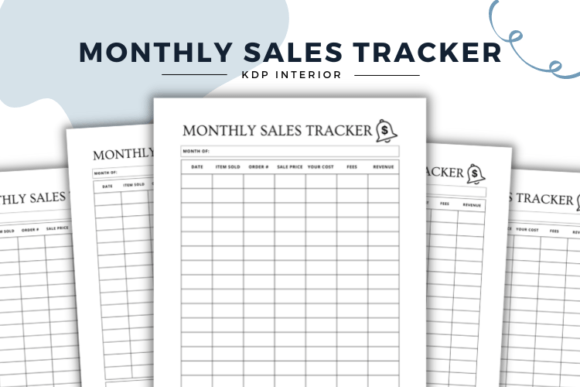
That’s why the practical value of a Monthly Sales Tracker Interior lies in its readiness. When your download includes PDF files ready for upload or print, PNG files for digital use, and a large 8.5x11 format, you’re removing all barriers to implementation. You’re getting a product that is, as described, ready for use without any problem. This immediate usability is what turns intention into action. You can start tracking this month, not after a month of designing your own system.
Turning Data into Direction
In the end, a monthly sales tracker is more than a logbook. For the adult seeking practical solutions to manage their financial performance, it’s a lens that brings their business into focus. It shifts the narrative from “I think I did okay” to “I know my revenue was X, my best-selling product was Y, and my growth from last month was Z.” This clarity is the first and most crucial step toward informed decision-making, strategic growth, and building a business that is not only operational but truly manageable.
Whether you’re a seasoned entrepreneur or just beginning your side hustle, introducing a structured, ready-to-use tracking system into your routine is a low-effort, high-impact move. It transforms the opaque into the transparent and gives you the quiet confidence that comes from truly knowing your numbers.