Key Features and Considerations for a 2023 Monthly Planner with Calendar Log Book
When exploring interior designs for low-content book publishing, such as a planner or log book, a specific set of specifications often emerges as a standard offering. A product described as a "2023 Monthly Planner with Calendar and Ready to Upload," typically bundled as a ZIP file containing PDF, EPS, and SVG formats, represents a particular category of digital asset. This article examines what this type of product entails, its distinct characteristics, and how it compares to other approaches in the self-publishing landscape, helping you evaluate if it aligns with your project goals.
Understanding the Core Product Specifications
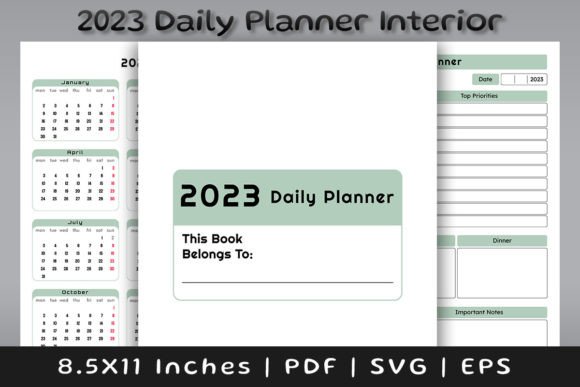
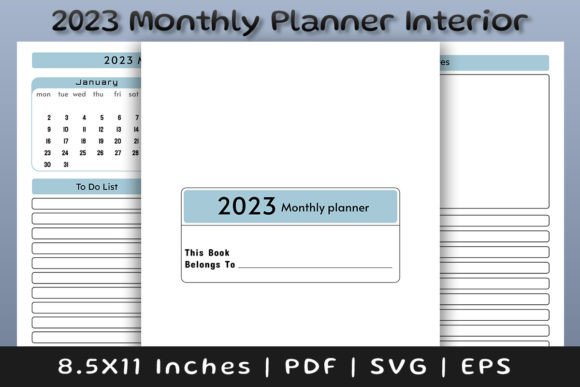
The fundamental specifications for this 2023 Monthly Planner with Calendar are quite clear: a 24-page document formatted at 8.5 x 11 inches, designed without bleed, at 300 DPI resolution, accompanied by editable source files. The inclusion of PDF, EPS, and SVG files in a compressed ZIP archive is a notable feature. Each format serves a different purpose for the publisher. The PDF is the print-ready, finalized version. The EPS and SVG files are vector-based source files, intended for further customization in graphic design software like Adobe Illustrator or Inkscape. This trio of files addresses different stages of the publishing workflow—from immediate uploading to potential modification.
What makes this offering distinct from simpler template packs is precisely this combination of ready-to-use and editable assets. A publisher can upload the PDF directly to a platform like Amazon KDP without any changes, benefiting from a guaranteed print-ready state. Conversely, the editable EPS and SVG files provide a pathway for differentiation. If you wish to change colors, fonts, or minor layout elements to create a slightly unique variant, these source files are the starting point. This dual nature is a significant characteristic, positioning it between a rigid, fixed template and a fully customizable design project.
Comparing Format and Page Count Approaches
The 24-page, monthly-focused structure invites comparison with other planner formats available for low-content publishing. A common alternative is the undated planner, which offers perpetual use but requires the user to fill in months and years. The dated 2023 Monthly Planner with Calendar is specific to that year, which is a consideration for both utility and market timing. For a buyer in 2023, it was a current tool. For a publisher now, it serves a niche for those seeking a historical or record-keeping log book, or perhaps for repurposing the design framework for a future year using the editable files.
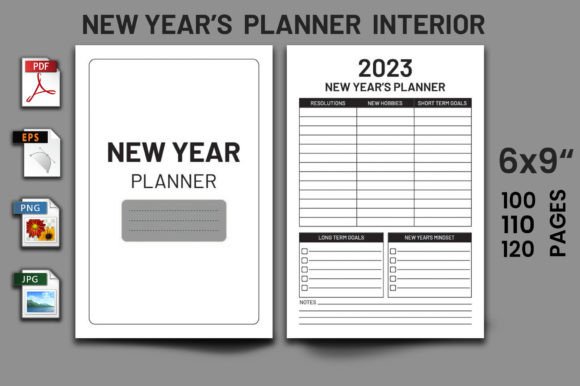
Page count is another point of comparison. Many basic planners opt for 12 pages—one per month. This 24-page version likely dedicates two pages to each month, perhaps offering a calendar view alongside a notes or goals section. This expanded space per month is a strength for users who prefer more room for planning details. However, it represents a tradeoff in the final product's physical thickness and perceived value. A 24-page book is relatively slim. Some publishers and customers might compare this to more comprehensive 100-page planners or journals, which cater to a different need for extensive daily logging. The 24-page 2023 Monthly Planner with Calendar fits a specific, minimalist planning style.
The Significance of "No Bleed" and Large Size
The specification of "No Bleed" is a critical technical distinction. Bleed refers to design elements that extend beyond the trim edge of the page, ensuring a clean cut when printing. A "No Bleed" design means all content is safely within the margins. This simplifies the design process and reduces the risk of printing errors for new publishers. It is a pragmatic choice for a ready-to-upload product, ensuring compatibility with platforms' automated checking systems. However, it also limits design aesthetics. Planners with full-color backgrounds or borderless graphics typically require bleed. Therefore, this 2023 Monthly Planner with Calendar likely has a clean, margin-based layout, which is a strength for reliability but a limitation for visual flair compared to more graphically intense alternatives.
The 8.5 x 11 inches size, standard US Letter, is a large format. This compares to more portable options like A5 (roughly 5.8 x 8.3 inches) or even pocket-sized planners. The large size offers ample writing space, making it suitable for desk use, project planning, or as a teacher's monthly log. Its tradeoff is portability. A buyer comparing options must weigh the need for space against the convenience of carrying the planner. This large format often aligns with professional or business use cases rather than personal, on-the-go scheduling.
Evaluating the Editable Source Files and Quality Claims
The provision of editable EPS and SVG source files is a major factor in evaluating this product against other templates. Many low-content book interiors are sold only as flat PDF or JPG files. These are usable but locked. The inclusion of vector source files adds a layer of potential value for publishers with design skills or access to a designer. It allows for the creation of derivative works—perhaps altering the design for a 2024 version, changing color schemes for different market niches, or integrating minor branding elements.
This flexibility, however, comes with prerequisites. You must have software that can edit EPS/SVG files and at least basic competency in using it. For a publisher seeking a truly "ready to upload" experience with zero modification, these files are an unused bonus. Their presence makes this product a better fit for those who fall in the middle ground: wanting a starting point that is both functional and adaptable. Comparing it to fully custom design services, this product is vastly more affordable and immediate, but of course offers less uniqueness than a bespoke design.
The specifications also state "300 DPI high resolution" and "High Quality print ready files." These are expected standards for print products. When comparing, it's wise to note that some low-cost template marketplaces might offer lower-resolution files, which can lead to blurry print output. This explicit claim addresses a common concern. Yet, the ultimate verification comes from inspecting the actual PDF or, if possible, ordering a proof copy from your printer.
Identifying the Best-Fit Situations and Limitations
A product like this 2023 Monthly Planner with Calendar Log Book interior is likely the right choice under several practical scenarios. First, it fits publishers new to KDP who want a technically sound, no-hassle first upload. The "No Bleed," correct size, and bundled PDF minimize common beginner errors. Second, it suits publishers looking to create a simple, dated monthly planner for the 2023 year, perhaps targeting niches like "2023 Project Retrospective Logs" or "2023 Fitness Progress Trackers." Third, it is a strong option for those who want a foundational template they can lightly customize in future projects using the source files, thereby building a small suite of related planners.
Conversely, there are clear situations where you might need another option. If you are targeting the current year (2024 or 2025), a dated 2023 planner is obviously not relevant unless you significantly modify it. If your audience expects highly decorative, full-bleed, or intensely graphic planners, this clean, no-bleed format may feel too basic. If you require daily pages, hourly scheduling, or extensive note sections, the 24-page monthly focus will be insufficient. Furthermore, if you have no intention or capability to edit source files, you might compare this product to even simpler, cheaper PDF-only templates that serve the same "upload-ready" function.
The Decision Factor of Bundled File Types
A key decision factor is your intended use of the different file types in the ZIP archive. The PDF is the operational file for publishing. The EPS and SVG are investment files for future flexibility. When evaluating alternatives, consider whether competing products offer similar source files. Some may offer only PNG files, which are not scalable vectors. Others might offer editable files in formats like AI (Adobe Illustrator) or CDR (CorelDRAW), which tie you to specific software. The EPS/SVG combination is relatively software-agnostic, usable in many free and paid programs. This versatility can be a deciding point if you value long-term adaptability over immediate, lowest-cost purchase.
In practice, a publisher might use this 2023 Monthly Planner with Calendar in two ways. Example one: direct upload. They download the ZIP, extract the PDF, and upload it to KDP as the interior for a "2023 Business Monthly Log," publishing it within an hour. Example two: customized series. They use the SVG files to change the header font and add a subtle color bar, creating a "2023 Creative's Monthly Planner." They then replicate the process for 2024 by updating the calendar dates, thereby using the single purchase to generate multiple products over time. The same asset serves very different publisher profiles.
Making an Informed Choice for Your Publishing Project
Choosing a resource like this involves weighing immediate convenience against future flexibility, and specific format against market needs. The 2023 Monthly Planner with Calendar with its stated specifications is a robust, middle-ground option. It avoids the extremes of being a locked, inflexible template or an overly complex, blank-canvas design project. Its strengths are in its technical readiness, the inclusion of editable source files for customization, and its clear focus on a large-format monthly layout. Its tradeoffs are its year-specific date, its no-bleed design limitation, and its relatively low page count compared to comprehensive journals.
When researching ideas for your low-content book, consider where this product fits on the spectrum of alternatives. If your primary goal is speed and certainty for a dated, monthly-planning log book, it is a strong candidate. If your goal is to build a unique brand with highly distinctive interiors, you may need to look towards more customizable design services or invest time in learning to modify the provided source files deeply. Ultimately, products like this serve as valuable tools, reducing the technical barriers to publishing while offering a springboard for those ready to take a next step in customization. By understanding its distinct features and practical comparisons, you can better assess if it aligns with your current publishing strategy and resource needs.