The Password Book Deutsch Edition Interior: A Practical Resource for German Users
In a digital age dominated by complex login requirements and frequent password changes, the physical management of credentials remains a surprisingly relevant practice. For German-speaking users, a specialized resource like the Password Book Deutsch Edition Interior offers a tailored solution. This downloadable product is designed as a complete, editable interior template for a password logbook. It provides the structural framework—pages, layout, and design elements—ready for personalization and printing, catering specifically to those who prefer a tangible, offline system for organizing their digital keys.
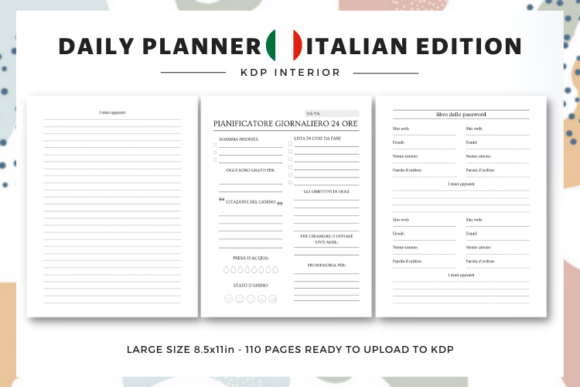
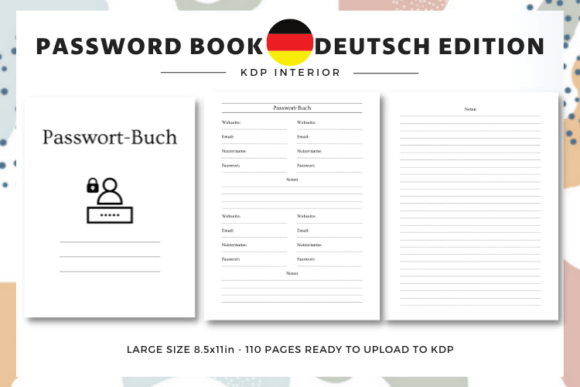
Understanding what this product entails is key to evaluating its fit for your needs. The Password Book Deutsch Edition Interior is not a pre-filled book shipped to you. Instead, it is a digital package of template files. Your download includes PDF files of the interior pages, formatted and ready for upload to platforms like Kindle Direct Publishing (KDP) for self-publishing a physical book, or for direct printing at home or through a local service. Additionally, PNG image files of the design elements are included. The template is set to a large size of 8.5 × 11 inches (approximately A4), comprises 110 pages, and is designed with no bleed, making it straightforward for standard printing. The core proposition is convenience: you can easily download, edit, and use these files without specialized design skills.
Distinct Characteristics and Design Philosophy
What sets the Password Book Deutsch Edition Interior apart from generic notebook ideas is its targeted design language and structure. Firstly, the edition is explicitly "Deutsch," implying that headings, labels, and instructional text within the template are in German. This eliminates the need for users to adapt or translate an English-based logbook, providing immediate clarity and cultural relevance. Secondly, the interior is professionally formatted with dedicated sections for logging website names, URLs, usernames, passwords, notes, and date of changes. This structured approach promotes consistency and thorough record-keeping, which is often lacking in a simple blank notebook.
The inclusion of both PDF and PNG files offers flexibility. The PDFs provide a fixed, high-quality layout for immediate use, while the PNGs allow for deeper customization if you wish to integrate elements into other software or modify certain graphics. The 110-page count suggests ample space for extensive records, suitable for individuals managing credentials for family, small businesses, or personal projects over a long period. The "no bleed" specification is a practical consideration; it means the design does not extend to the edges of the page, simplifying printing on standard consumer printers without requiring professional trim.
Comparing Approaches to Password Management
To assess the value of the Password Book Deutsch Edition Interior, it's useful to consider the spectrum of password management strategies. Broadly, these fall into digital and analog categories.
Digital Solutions: Password Managers
Software-based password managers are the dominant modern alternative. These applications generate, store, autofill, and sync complex passwords across devices. Their strengths are immense: they enhance security through encryption, facilitate unique passwords for every site, and offer incredible convenience for daily use. The tradeoffs, however, include reliance on a specific service, subscription costs for premium features, and the inherent risk of a digital master password or service outage locking you out of all accounts. For users uncomfortable with a fully digital vault or those seeking a purely offline backup, a physical log serves as a critical failsafe.
Analog Solutions: Generic Notebooks vs. Structured Templates
Within the analog realm, the simplest alternative is a blank notebook or any paper pad. This offers maximum freedom and zero cost for the "template." However, its limitation is disorder. Without predefined fields, entries can become inconsistent, incomplete, and hard to reference later. The Password Book Deutsch Edition Interior sits between these extremes. It provides the structure of a purpose-built tool while retaining the offline, tangible nature of paper. Compared to purchasing a pre-made physical password book from a retailer, this downloadable interior offers control. You can print it as many times as needed, choose your binding, and edit fields before printing if your requirements differ slightly.
Evaluating Fit: When This Template Is the Right Choice
The Password Book Deutsch Edition Interior is not a universal solution. Its suitability depends on specific user profiles, preferences, and circumstances.
It may be an excellent fit for:
- German-speaking individuals and households who prefer instructions and labels in their native language for clarity and ease of use.
- Users with a strong preference for offline, non-digital backups. This includes those wary of cloud services or who want a physical artifact immune to hacking or digital corruption.
- Individuals managing passwords for others, such as in a family setting or a very small local business, where a shared, physical book kept in a secure location is a practical shared reference.
- People who enjoy the process of customizing and creating physical items. The downloadable, editable nature of the files appeals to those who might want to add a custom cover or bind the pages in a particular way.
- Users seeking a structured starting point without ongoing costs. Unlike subscription software, this is a one-time resource.
Recognizing Limitations and Considering Alternatives
Conversely, there are scenarios where the Password Book Deutsch Edition Interior might not meet your needs, and another approach would be more appropriate.
Consider its limitations:
- No inherent security beyond physical possession. A paper book offers no encryption. If lost or accessed by an unauthorized person, all credentials are exposed. Its security relies entirely on you storing it in a safe, locked place.
- No automation or sync. It cannot autofill passwords on websites. Every login requires manually looking up and typing the credentials, which can be time-consuming and prone to error.
- Static nature. While editable before printing, once printed, updating it requires manual edits, new printouts, or messy handwritten corrections.
- Requires active printing and binding effort. You must take the digital files and turn them into a physical product, which involves time, a printer, and potentially binding materials.
If your primary concerns are convenience for daily use and high-grade security, a reputable digital password manager is almost certainly a better primary tool. The physical Password Book Deutsch Edition Interior could then serve a secondary role as an encrypted master password backup or a printed emergency recovery plan. For users who are highly mobile and need access to passwords everywhere, a digital solution that syncs to a phone is indispensable; a physical book cannot travel everywhere safely.
A Practical Comparison Scenario
Imagine a user, Anna, who manages passwords for her online banking, various subscription services, and her small freelance business. She is comfortable with technology but prefers German-language materials and has concerns about forgetting a master password for a digital manager. She opts to use a digital password manager as her primary daily tool for its autofill and generation features. However, she downloads the Password Book Deutsch Edition Interior. She edits the first page to include her emergency recovery information for the digital manager and then prints the rest of the book. She keeps this printed book in a locked drawer at home, updating it periodically with a printed list of her most critical passwords from the digital manager's export feature. This hybrid approach leverages the strengths of both systems: daily convenience and strong encryption from the software, and a secure, language-friendly, offline backup from the template.
Key Decision Factors for Potential Users
When deciding if the Password Book Deutsch Edition Interior is a resource worth acquiring, weigh these factors:
- Language Requirement: Is having a pre-structured template in German a significant advantage for you or the intended users?
- Primary Management Style: Will this be your main password repository, or a backup to a digital system?
- Technical Comfort & Access: Do you have the ability and willingness to print and potentially bind a 110-page document?
- Security Context: Can you guarantee the physical security of the book in a consistent, reliable location?
- Scope of Needs: Does the 110-page, structured layout adequately cover the number and type of entries you foresee?
The product excels as a ready-made solution for creating a professional-looking, German-language physical record. Its tradeoffs are inherent to any analog system: lack of automation and dynamic updating. For users whose evaluation prioritizes offline access, language specificity, and structured organization over daily digital convenience, the Password Book Deutsch Edition Interior presents a clear and practical option. In a landscape filled with digital tools, it affirms that a well-designed physical counterpart still holds valuable, specific utility for informed users making deliberate choices about their information management.